1965
On November 2, 1965,
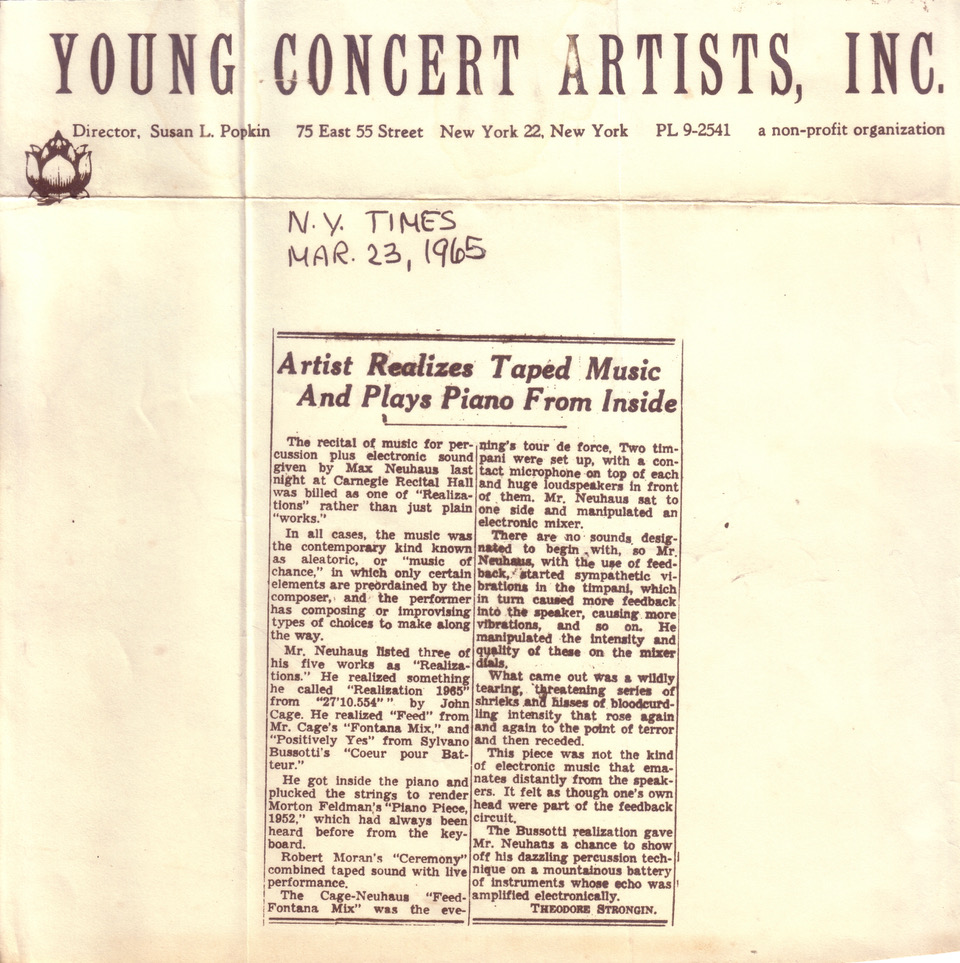
John Cage recorded a "Realization '65" of his composition 27' 10.554" at the British Broadcasting Corporation (BBC) Studios in Maida Vale, London. This was a studio recording, not a public performance, and it featured percussionist Max Neuhaus. The recording's catalog listing indicates it lasted 9 minutes and 23 seconds, a duration shorter than the piece's title, suggesting it may have been an excerpt.
The composition: 27' 10.554"
- A "virtuoso" percussion piece: Composed in 1956, 27' 10.554" is an indeterminate work for a solo percussionist. Cage specifies that a performance should use a wide variety of instruments, including metal, wood, and skin, as well as "all others," which can include electronics, radios, and other objects.
- Chance operations: The piece was composed using chance procedures, a hallmark of Cage's style during this period. The composer used imperfections in the paper to guide the notation, ensuring his personal aesthetic preferences would not influence the final work.
- Flexibility in performance: The score allows for great flexibility. It can be performed as a solo piece or combined with other works in the Ten Thousand Things project to create an ensemble piece. A pre-recorded tape can also be used.
- Relationship to duration: The title refers to the piece's total duration, yet Cage's notation system assigns one minute of performance time per page, meaning the length of any realization can vary
The performer: Max Neuhaus
Max Neuhaus (1939–2009) was a prominent American percussionist and sound artist known for his performances of experimental music. He collaborated with Cage on numerous occasions, and his 1965 recording at the BBC is a significant historical document of his work as a percussionist before he moved fully into sound installation art