1973
Free Music Store Church. 359 E. 62 Street. NYC.
* * *
The Networks propose the self-evolution of new musics. Their premise is a form of music making which remains now only in societies untouched by modern man.
Rather than something to be listened to, music in these cultures is an activity open to the public at large -- a dialogue with sound rather than a performance. I believe this to be the original impulse for music in mankind.
Public Supply (1966) combined a radio station with the telephone network to create what we now call a virtual space -- a public two-way aural space twenty miles in diameter encompassing New York City. Any inhabitant could enter the live sound dialogue by making a telephone call.
Max Neuhaus
____
MNE-TEXT, The BROADCAST WORKS And AUDIUM. By Max Neuhaus, 2005

IMGP2509.
Max Neuhaus Drawing Public Supply
WFMT Chicago - Broadcast Work, 1982 - Ink and colored pencil on paper - 68 x 117 cm
Sound work references: Public Supply III, 1973
Drawings in exhibition: Alfonso Artiaco gallery exhibition dedicated to Max Neuhaus, inaugurated on Friday 16 January 2015,
Photo: Courtesy Galleria Alfonso Artiaco
* * *
The drawing describes the first work in 1966. It represents the aural space which was formed by a radio broadcast covering one thousand two hundred square miles of the New York Metropolitan area, and its telephone network. The work was initiated by advertising a phone number and a broadcast time. It was also necessary to explain that their calls would be put on the air, as this was well before the time when the format of a radio phone-in program was practiced.
People entered the space through a game of chance. There were many more callers than incoming lines. A caller was able to enter if his call coincided with the exit of another person (callers were limited to a maximum of three minutes each.) I listened to each person and joined them into broadcast groups which were then put on the air together. While they were on the air I acted as a balancer or moderator of the group by adjusting the way their sounds were mixed together. I re- proportioned them according to what each person was doing, as a way of developing activity within the group -- a way of getting them to listen to what they were doing and what others in the group were doing
Max Neuhaus
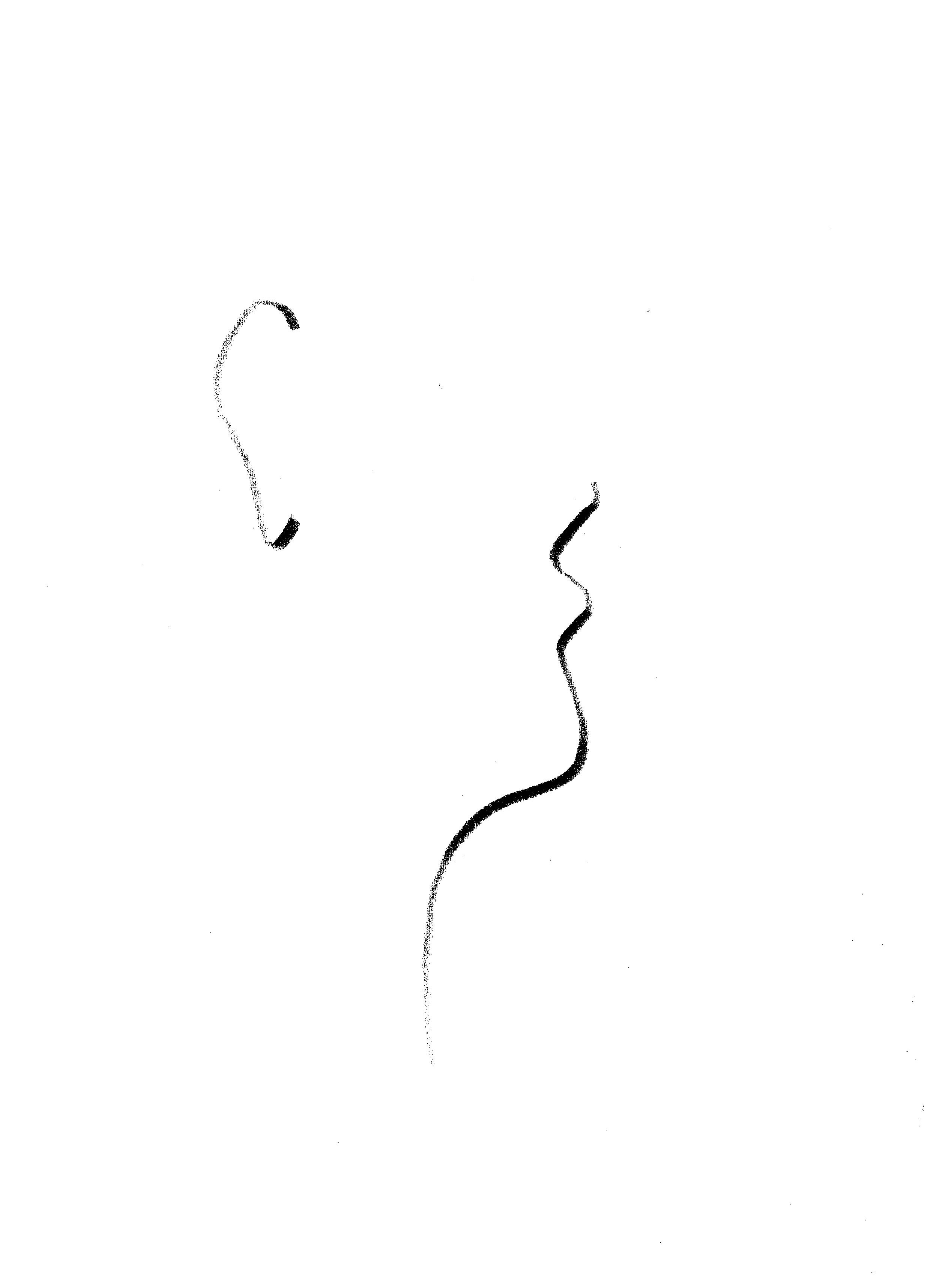
IMGP2454.JPG
Public Supply
Max neuhaus Drawing, Voice, 2003 - Pencil on paper - 31 x22 cm
Collection Max Neuhaus Estate
Sound work references: Networks
Voice - a drawing using two curved lines to represent the human voice. In 2004 it was integrated into 'Auracle', Neuhaus' interactive sound work for the internet. (http://www.auracle.org/)
December 31-January1. Max Neuhaus Makes Music. WBAI Free Music Store Church. 359 E. 62 Street. NYC. Work(s): Public Supply.
PUBLIC SUPPLY III is a landmark telecommunications sound installation by Max Neuhaus that took place over New Year's Eve from December 31, 1972, to January 1, 1973, broadcast live on radio station WFMT-FM in Chicago.This project represented a major technical and conceptual evolution from his previous Public Supply iterations (New York in 1966 and Toronto in 1968), as Neuhaus moved past simply mixing sounds and began giving listeners custom electronic "instruments" to play over the phone network.The Technical FrameworkVoice-Activated Synthesis: Unlike his first radio works—where listeners called in to play records, instruments, or make random noises—Neuhaus built a dedicated sound synthesis circuit for each incoming phone caller.Interactive Oscillators: He utilized electronic oscillators where the pitch and modulation were entirely dictated by the vocal energy and volume of the caller's voice over the telephone line.Evolving Sound Clusters: The incoming phone signals were mathematically integrated over a long period of time. This created a dense, slowly shifting bank of pitches that formed a complex musical cluster, constantly morphing in real time based on how the public used their voices.