1968

IMGP2508.JPG
Max Neuhaus Drawing
Public Supply II
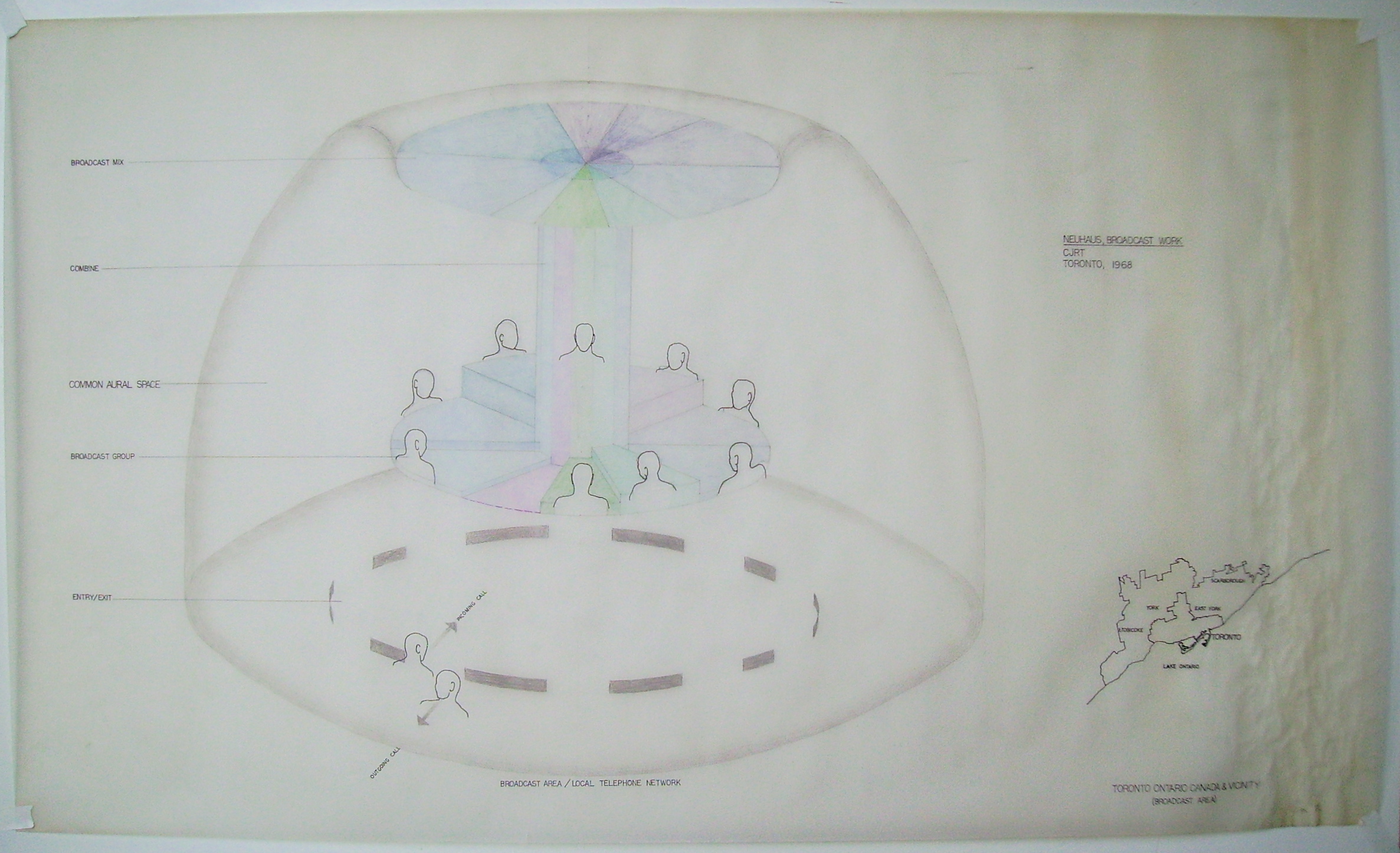
CJRT Toronto - Broadcast Work, 1982 - Ink and colored pencil on paper - 68 x 116 cm Sound work references: Public Supply II 1968
* * *
The drawing describes the first work in 1966. It represents the aural space which was formed by a radio broadcast covering one thousand two hundred square miles of the New York Metropolitan area, and its telephone network. The work was initiated by advertising a phone number and a broadcast time. It was also necessary to explain that their calls would be put on the air, as this was well before the time when the format of a radio phone-in program was practiced.
People entered the space through a game of chance. There were many more callers than incoming lines. A caller was able to enter if his call coincided with the exit of another person (callers were limited to a maximum of three minutes each.) I listened to each person and joined them into broadcast groups which were then put on the air together. While they were on the air I acted as a balancer or moderator of the group by adjusting the way their sounds were mixed together. I re- proportioned them according to what each person was doing, as a way of developing activity within the group -- a way of getting them to listen to what they were doing and what others in the group were doing.
Max Neuhaus